Blog
Expert perspectives on AI-powered surveys, market research methodology, and data-driven decision making.
Emotion AI just entered the GRIT report's tracking with immediate strong adoption, promising a shortcut past the limits of self-report. But reliability data show real problems: cross-cultural bias, poor test-retest consistency, and a gap between a facial reaction and an actual purchase decision. Here's where it earns a place in a research program, and where it doesn't.
AI chatbots now shape purchase decisions before your brand tracker ever gets a chance to ask a question. Most research programs have no idea what ChatGPT, Gemini, or Perplexity are telling prospective customers about them. Here's what it takes to bring AI perception into a real research program.
Most research programs are built to answer yesterday's question. What shifted after the campaign, what consumers said in the concept test. Useful information. Also backward-looking. The research functions gaining ground in 2026 are building for a different question: what will consumers do next?
Almost every research team uses AI now. Only 8% trust it to be the respondent. Synthetic respondents promise speed and scale, and on the right questions they deliver. On the questions that actually matter, they quietly fail in ways the output never shows.
AI tools are doing real work in qualitative analysis. They code transcripts, cluster open-ends, and surface themes at a scale no human team can match. But they introduce a category of error that is harder to catch than hallucination: systematic bias that makes the output look right even when it isn't.
The research was good. The methodology was right. It still arrived after the decision was made. Most insights teams treat that as bad luck. The better framing is that it's a design problem, and one that's entirely fixable.
The industry spends significant resources detecting bots and AI-generated responses. Almost none goes into the quality problem that starts earlier: how participating actually feels. When that experience breaks down, the data suffers in ways fraud detection can't catch.
Most research programs treat qualitative and quantitative work as separate disciplines, separate vendors, separate timelines. That separation made sense once. In 2026, it’s habit masquerading as methodology, and the teams who’ve moved past it are getting better answers for less budget.
Only 35% of corporate insights functions systematically measure their own return on investment. Most track outputs: studies delivered, reports filed, stakeholder scores. Very few track decisions influenced, risks avoided, or revenue outcomes tied to research. In a year of budget scrutiny, that distinction is starting to matter.
Most insights teams are doing more research than ever. The problem isn't output. It's everything around it: the consent templates nobody can find, the participant pool managed across four spreadsheets, the briefing process rebuilt from scratch every project. That's the operational layer. And it's what breaks first.
The traditional panel model was built for speed and scale. Neither of those things are the same as data quality. A growing number of research teams are figuring out the difference by building respondent relationships instead of renting anonymous access.
AI systems optimize for coherence, not truth. In research synthesis that distinction matters more than most teams realize. The most dangerous hallucinations are the polished ones that make it into the deck before anyone checks the source.
Surveys capture stated intent. Behavioral data captures actual choice. Research teams in 2026 are increasingly working with both, and what they find in the gap is making the say-do problem impossible to keep designing around.
AI and self-service tools have made research accessible to any team with a question and a tool subscription. That’s mostly good news. The quality problem it’s creating is moving faster than the industry’s response to it.
89% of professional researchers now use AI tools regularly or experimentally. The next wave isn’t AI tools at all. It’s AI agents that initiate, decide, and chain research steps without human approval at each move. That changes the oversight problem in ways most teams haven’t thought through yet.
AI-moderated conversational research is breaking the oldest tradeoff in market research. You can now run adaptive, branching interviews with thousands of participants in 24 hours. What you do with those responses is where the methodology still matters.
Most research teams produce excellent work. The problem is structural: studies are built for delivery, not retrieval. Here is what it costs when insights programs run as collections of isolated projects rather than a connected body of knowledge.
Research teams are losing influence to peers using AI, but the fix isn’t a prompt engineering course. The real gap isn’t technical. It’s the ability to critically evaluate what AI produces, and most upskilling programs aren’t built for that.
Good research ends up ignored more often than anyone admits. The problem is almost never the methodology. It’s the last mile: how findings travel from analyst to decision-maker, and whether they arrive in a form anyone can actually use.
Synthetic data is genuinely useful in market research. It is also genuinely misunderstood. Here is where it earns its keep, where the framework breaks down, and the three questions every researcher should ask before using it.
A consent form is not the same as informed consent. Most research practitioners know this. And yet most AI-driven workflows move forward without answering harder questions about algorithmic transparency, bias, and what respondents actually understand about how their data gets used.
Thirty-one percent of raw survey responses already contain some form of fraud. AI bots now evade standard detection 99.8% of the time. The data quality problem in online research is not a fringe concern. It’s a structural crisis hiding in plain sight.
Most organizations can collect continuous data. Very few act on it consistently. Here’s what separates the always-on insights programs that actually work from the dashboards nobody opens, and why the difference is organizational, not technical.
The argument about AI replacing researchers is settled. The harder question is how to structure a workflow where both actually deliver. That's still being worked out project by project. Here’s what the data and the practitioners say.
The debate about AI replacing researchers is missing the point. The real shift is about what researchers spend their time on - and the data shows something more nuanced than most headlines suggest.
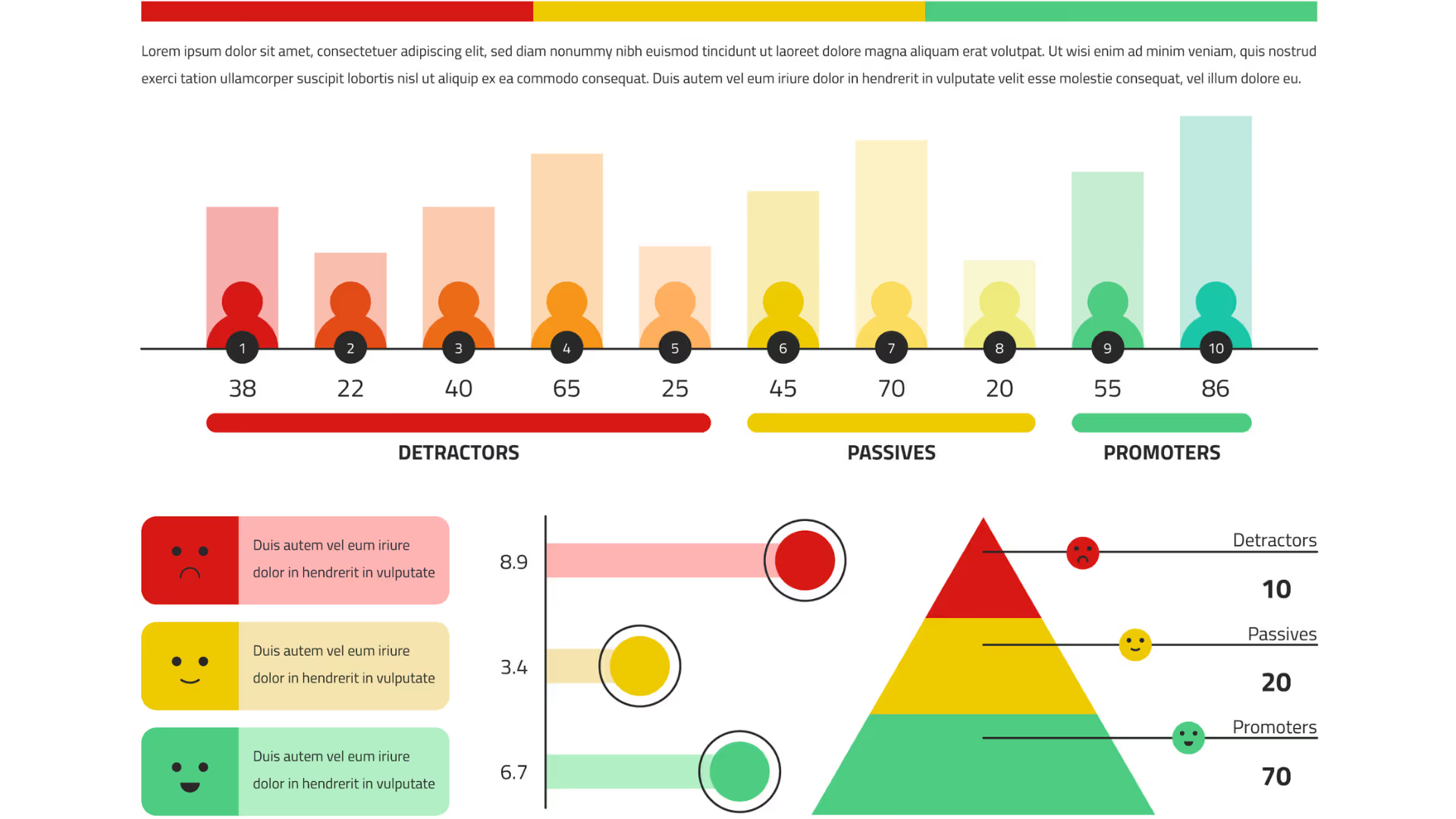
Learn how the Net Promoter Score measures customer loyalty, its history, how it works, common criticisms, and the latest developments making NPS more powerful than ever.
From surveys and focus groups to diary studies and user testing - the six core research methodologies every modern insights professional should know and when to use each one.
Explore how AI is transforming survey creation with unprecedented efficiency, personalization, and depth - and the challenges businesses should navigate along the way.























%20(1).avif)
